

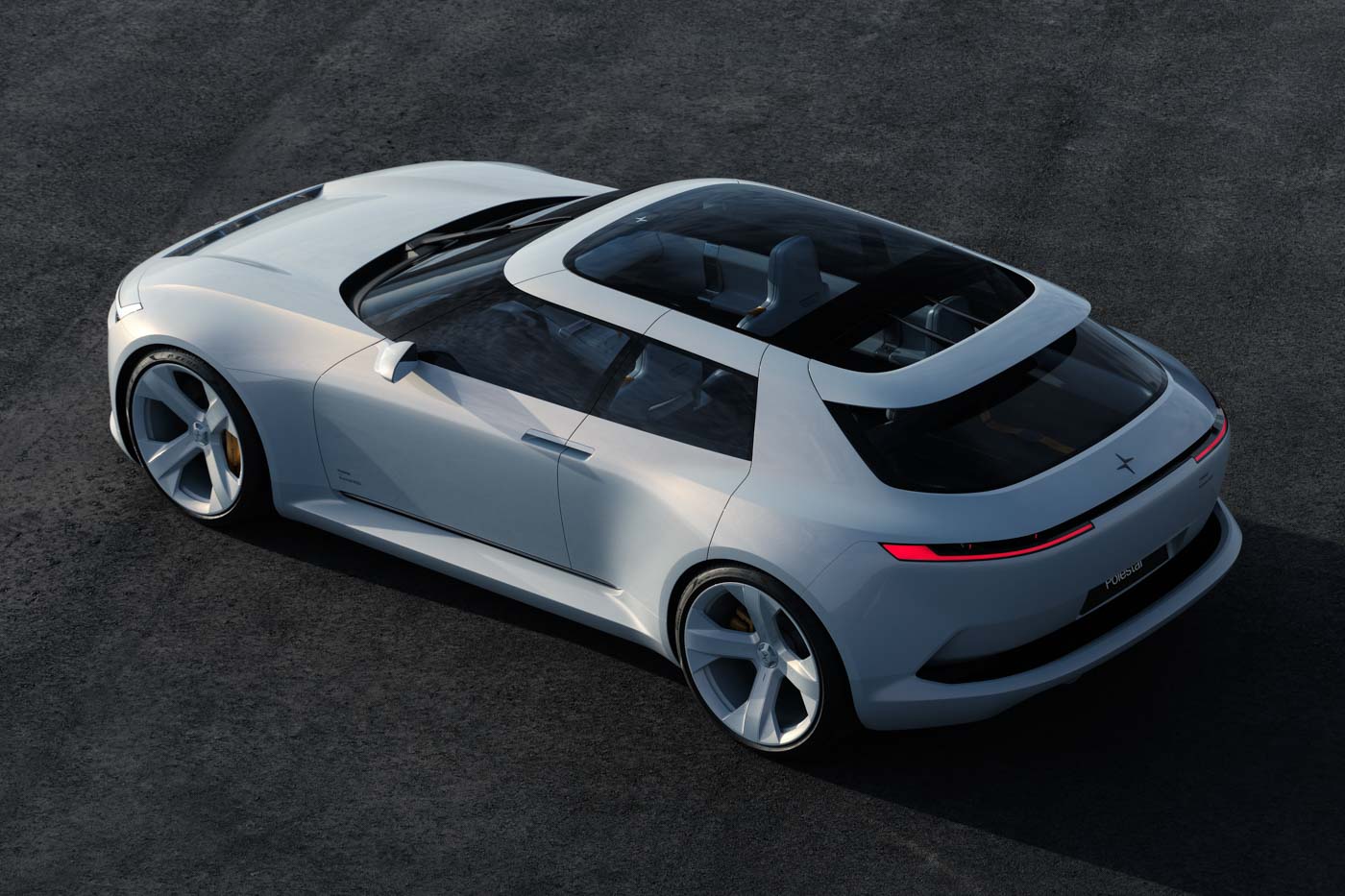
Polestar has pulled the covers off its Formula 2030 concept, offering a glimpse into the Swedish electric carmaker’s future design direction and the type of vehicles it hopes to introduce over the next decade.
Developed under the leadership of Polestar’s head of design, Philipp Römers, the concept represents the brand’s Formula 2030 strategy. More than just a styling exercise, it explores a possible future for electric performance cars, with a particular emphasis on low-slung proportions, minimalist design and a more driver-focused cabin.
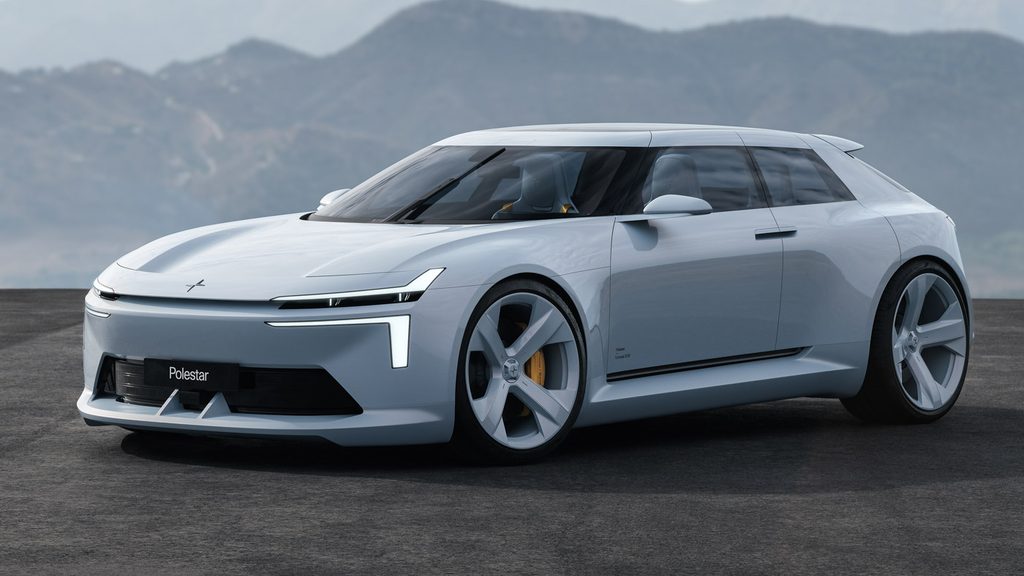
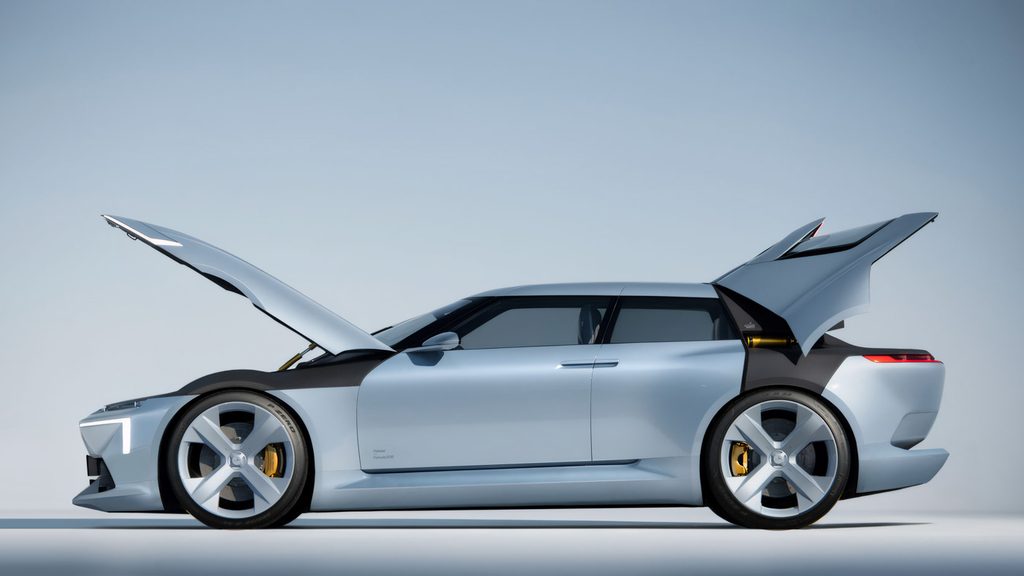
Measuring 4,680 mm long, 2,021 mm wide and featuring a 2,780 mm wheelbase, the Formula 2030 sits between the upcoming second-generation Polestar 2 and the Polestar 7 in terms of overall size. Its low-profile silhouette takes inspiration from the Polestar 4, although its proportions give it a distinctly sportier appearance.
A New Design Direction for Polestar
At the front, the concept features Polestar’s signature Dual Blade headlights, accompanied by a long bonnet, short overhangs and muscular rear haunches. The overall shape is further emphasised by massive 22-inch wheels.
Polestar’s design philosophy focuses on removing unnecessary visual elements while making the remaining details more purposeful. This approach is evident throughout the Formula 2030, including its integrated LiDAR sensors, which are concealed within the bodywork.
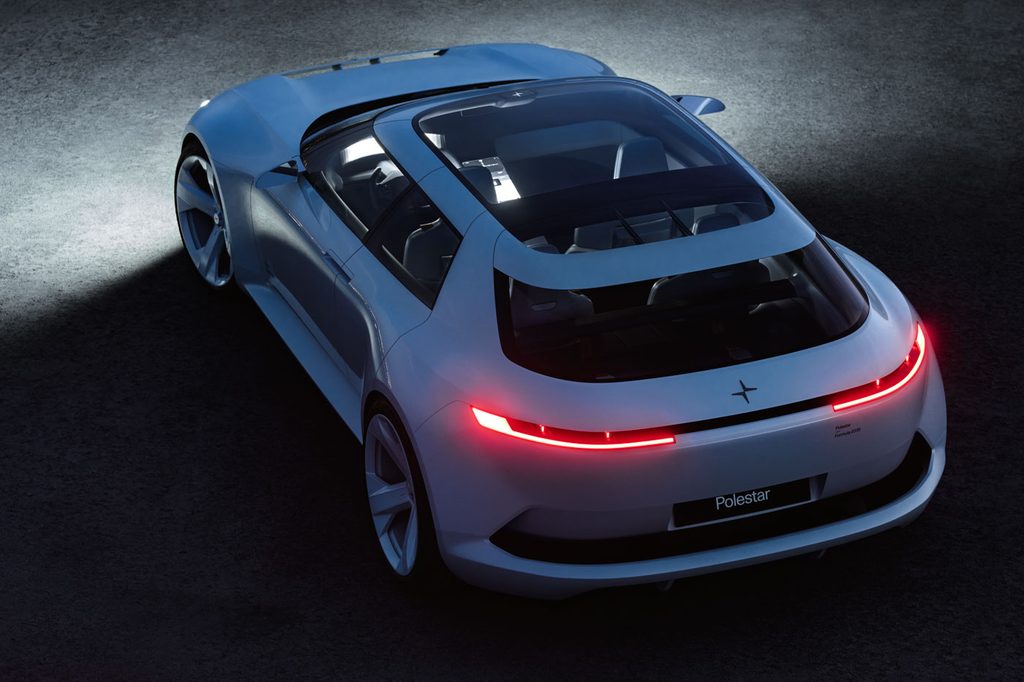
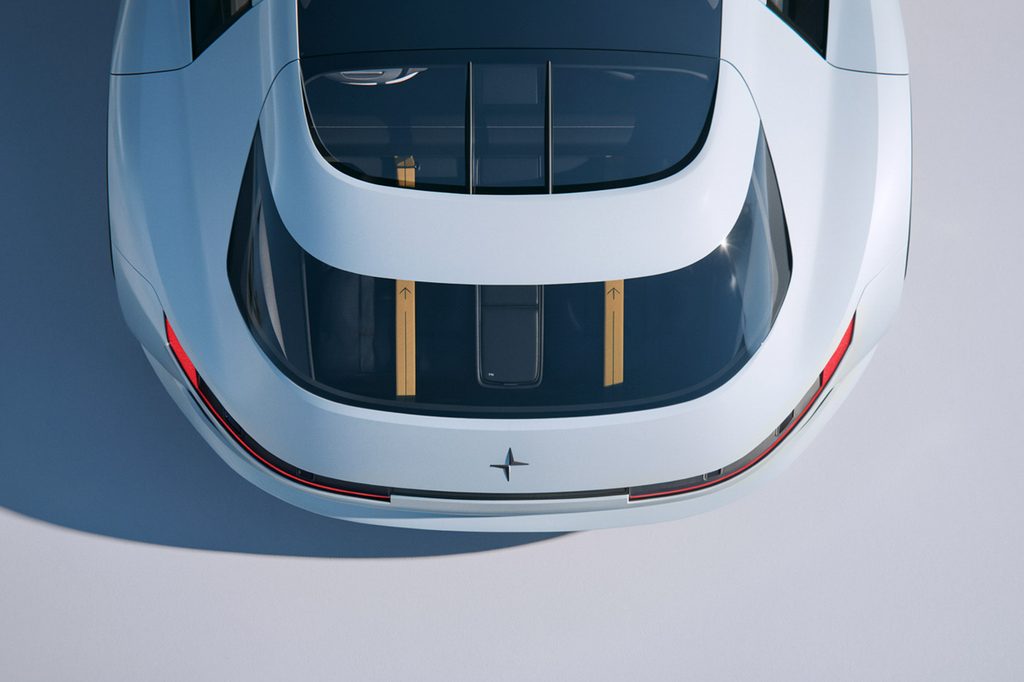
One of its more unusual features is the visor-like panoramic windscreen, which extends across the front of the cabin and incorporates a single vertical windscreen wiper inspired by motorsport applications. This design forms part of a central structural spine running from the front splitter towards the rear, with a large panoramic glass roof completing the look.
The rear is arguably the most futuristic section, with Polestar describing its UFO-inspired appearance as a defining design feature. It incorporates the brand’s new Single Blade taillight signature, which is expected to influence future production models, alongside a prominent rear spoiler and diffuser.
A Driver-Focused Interior With Customisable Controls
Inside, the Formula 2030 moves away from the conventional minimalist EV cabin and adopts a more performance-oriented layout.
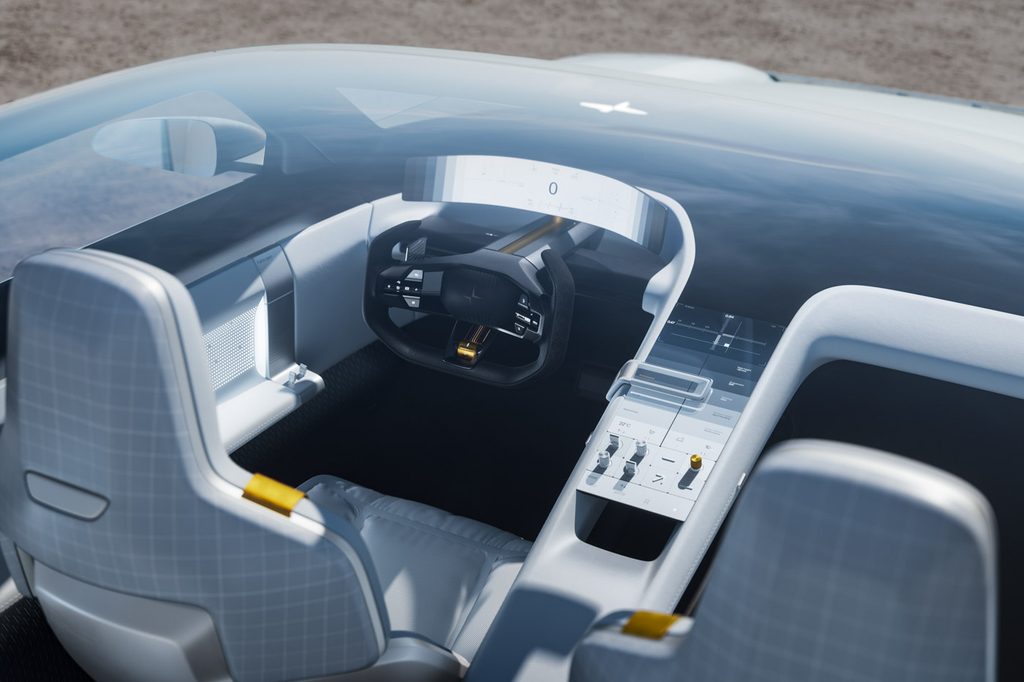
The four-door, pillarless design provides access to an interior featuring a 20-inch HyperDIM driver display mounted directly onto the steering column. It is accompanied by a 12.2-inch Centre Screen Display (CSD), with both screens positioned to keep important information within the driver’s line of sight.
The seats are another highlight, featuring four inflatable air bolsters designed to provide additional lateral and longitudinal support during spirited driving. Indirect ambient lighting is also integrated throughout the cabin to create a more immersive environment.
Perhaps one of the most interesting features is a customisable panel of physical controls. Owners can configure the switches according to their preferences, choosing between different rocker switches and rotary controllers for frequently used functions.
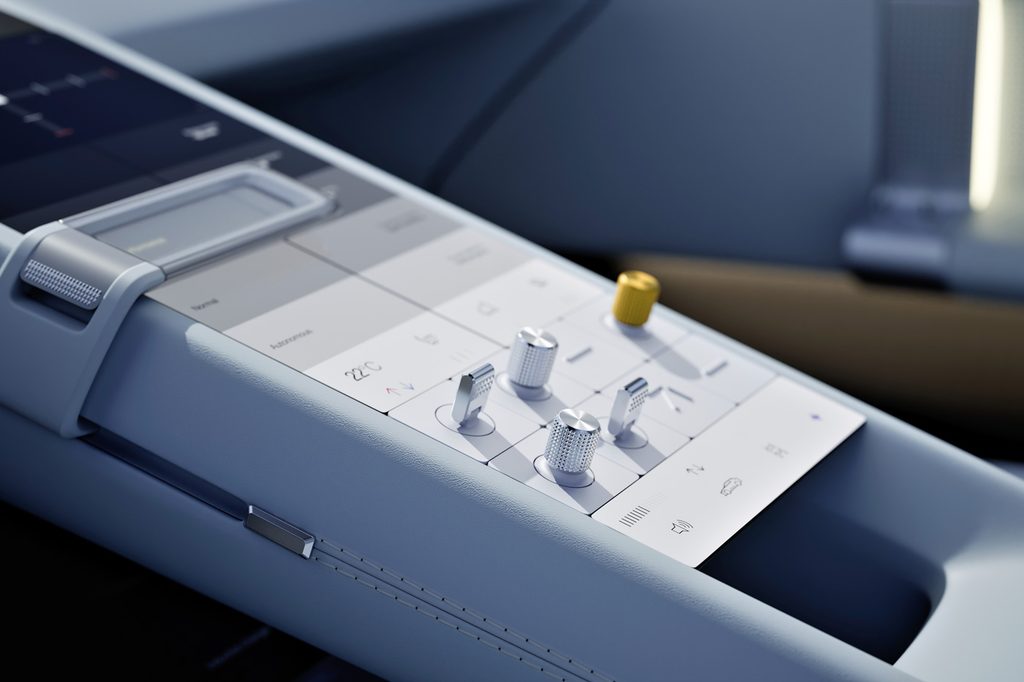
These physical controls work alongside Polestar’s next-generation digital interface, which is designed to present information clearly while minimising distractions.
Fully Electric With Three Driving Modes
As expected, the Formula 2030 is fully electric, although Polestar has not disclosed its motor configuration, battery capacity, power output or driving range.
Instead, the concept focuses on how drivers interact with the vehicle through three selectable modes: Performance, Normal and Autonomous.
A sliding selector on the centre console allows drivers to switch between these settings. The system also adjusts the central display and driving position to suit the selected mode, suggesting that Polestar is exploring a more adaptable cabin experience.
However, the company has yet to reveal further technical details about how the autonomous driving mode would operate.
Will We Ever See It on the Road?
Unfortunately, the Polestar Formula 2030 is not destined for production in its current form. It is a design study intended to preview the direction of the brand’s future vehicles rather than a confirmed upcoming model.
The good news is that Polestar has confirmed that several of the concept’s design elements will eventually find their way into future production cars.
Whether that includes its distinctive low-slung body style remains to be seen. With SUVs continuing to dominate the market, the Formula 2030 offers an interesting alternative vision of what electric performance cars could look like in the 2030s.
And if Polestar eventually turns this concept’s hatchback-inspired proportions into a showroom model, it could give the next decade a very different kind of electric car.

